

Energy Price Cap (January 2027): What It Means for You
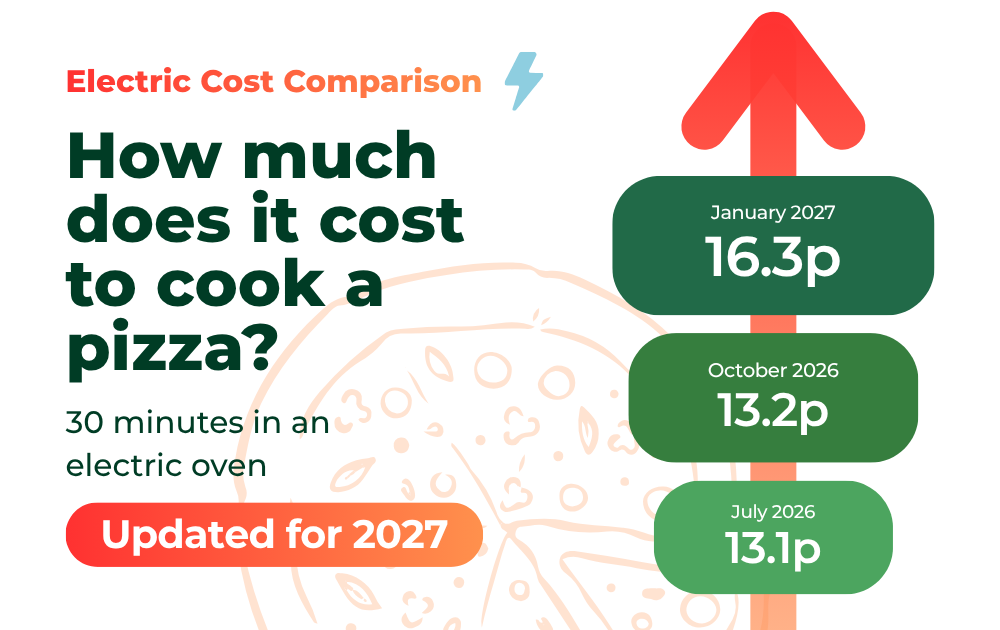
Figures are based on using a typical 2,500W electric oven for 30 minutes, including preheating. Cooking a pizza would cost around 13.1p in July 2026 and 13.2p in October 2026. From January 2027, this will rise to an estimated 16.3p per pizza, an increase of 24.2% compared with October.
Actual costs depend on your oven and usage. Figures exclude standing charges.
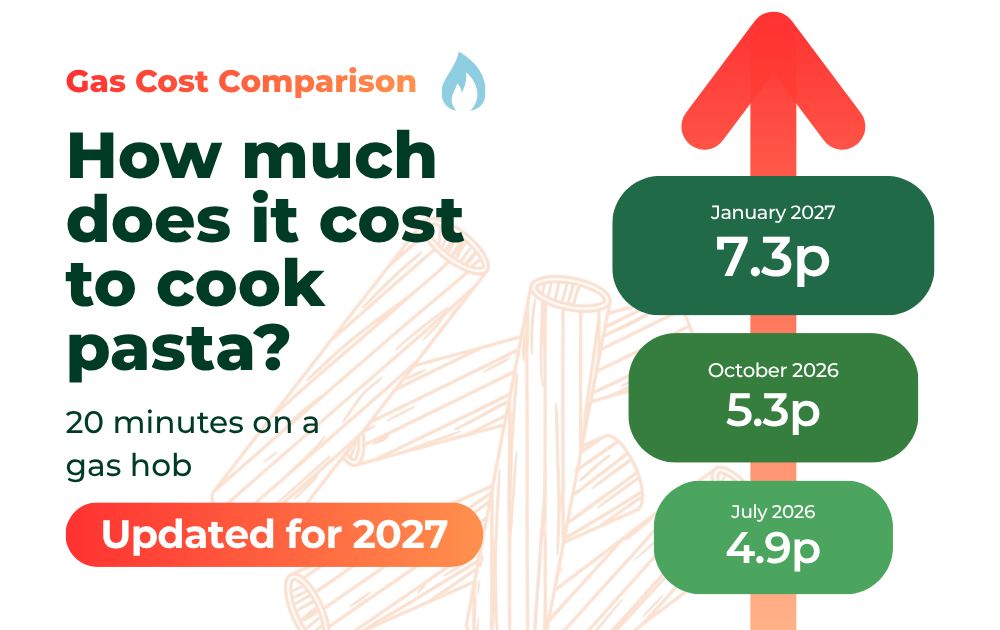
Figures are based on using a medium-sized 2kW gas burner for 20 minutes. Cooking pasta would cost around 4.9p in July 2026 and 5.3p in October 2026. From January 2027, this will rise to an estimated 7.3p, an increase of 37.5% compared with October.
Actual costs depend on your hob and usage. Figures exclude standing charges.
Sources: Energy Cost Calculator, Ofgem, MoneySavingExpert, GasBillCalc
Quick Summary
Overall Energy Price Cap – UP 26%
Electricity = Unit rate UP 24.2% & Standing charge DOWN slightly
Gas = Unit rate UP 37.5% & Standing charge DOWN slightly
VAT = Electricity: 0% VAT & Gas: 5% VAT remains
What does this mean?
- Gas has seen the biggest increases.
- The Energy Price Cap already increased by 13% in July and a further 4% in October. From January, gas unit rates are increasing by a further 37.5%.
- Around 13 million households are currently protected by the cap.
Those on a standard/default tariff who also rely on gas central heating are likely to feel the biggest impact.
Current forecasts suggest the Price Cap could come down by 1% in April 2027.
What’s Changing from 1st January 2027?
The latest energy price cap for January 2027 has been announced by Ofgem. This brings more difficult news for nearly 13 million households as we head into the coldest months of the year.
From 1st January 2027 to 31st March 2027, the energy price cap will rise by 26% for a typical household on a standard variable tariff. This is equivalent to an increase of around £443 a year, or £37 a month, if this level remained in place for a full year.
This follows the massive 13% rise we saw in July and a further 4% increase in October.
The timing is particularly concerning. July’s increase came during the summer, when households generally use less energy. So many households may not yet have felt the full impact of those higher rates. The latest rise will apply right in the middle of winter, when households are using significantly more energy for their heating.
What Is the Energy Price Cap?
Set by Ofgem, the energy price cap limits the maximum unit rates and standing charges suppliers can charge customers on standard variable tariffs.
However, it’s important to remember that the price cap is not a limit on your total energy bill – actual costs depend on your usage.
The price cap is reviewed every three months. The January cap will remain in place until 31st March 2027, with the next cap then covering 1st April to 30th June 2027, usually being announced in late February.
Does the Price Cap Increase Affect You?
It’s important to remember that the energy price cap only applies to households on their supplier’s ‘standard variable tariff’, also known as the ‘default tariff’.
This is generally the tariff you’re on if:
- you’ve never switched to a fixed deal
- your previous fixed tariff has ended and you haven’t chosen another deal
- you’ve remained on your supplier’s default tariff
If you’re already on a fixed energy tariff, the January price cap increase will not change the rates you’re currently paying. Your agreed rates will remain in place until your fixed deal ends. If you don’t choose another tariff when your fix ends, you’ll be moved onto your supplier’s standard variable tariff, where the price cap will then apply.
What About the Electricity VAT Cut Announced by the Government?
There is some good news. The Government’s removal of VAT from domestic electricity bills, which came into effect on 1st October 2026, has been extended until 30th June 2027.
Importantly, the VAT reduction means customers who are currently on fixed tariffs will benefit too.
The VAT cut has already been taken into account in Ofgem’s January price cap so you don’t need to do anything. Suppliers will automatically apply it to electricity bills.
However, gas will continue to have VAT charged at 5%. So, the impact on individual households will vary considerably depending on whether they use gas, electricity or both, and how much energy they consume.
Gas Users Could Feel the Biggest Impact
The changes aren’t equal across gas and electricity. Electricity unit rates will rise by around 24.2%, with the standing charge falling slightly.
Gas is where households will feel the biggest impact, with gas unit rates rising by around 37.5%, despite a slight reduction in the standing charge. This means households that rely heavily on gas for heating could see their bills rise by considerably more than just the headline 26% increase.
Could Energy Prices Come Down in April?
Unfortunately, there is currently very little relief in sight for households following the January increase.
Energy analysts at Cornwall Insight are currently forecasting that the energy price cap could fall by just 1% in April 2027, taking the typical annual energy bill from £2,166 to £2,151. Ongoing instability in the Middle East is continuing to keep wholesale energy markets inflated.
However, this is currently only a forecast. It has not been confirmed and wholesale energy markets can always change before Ofgem sets the next price cap in February.
With energy prices expected to remain high, this is particularly worrying for households already struggling with their energy costs and being able to heat their homes.
What Can You Do Now?
Fix your tariff if you can.
If you’re on a standard variable tariff, it’s absolutely worth comparing the fixed deals currently available to see for yourself whether fixing could save you money.
However, make sure you look at the unit rates, standing charges, length of the fix and any exit fees before making a decision.
If you’re already struggling with your energy bills, we really can’t stress this enough: now is the time to reach out for help. Don’t wait until the January price cap increase comes into effect. Support may be available to help reduce your energy costs, maximise your household income and make your home warmer and more energy efficient. The sooner you ask for help, the more options you may have.
What Home Energy Support Is Available?
LEAP (Local Energy Advice Partnership) is a completely free energy advice and money-saving service, helping households stay warm and reduce their energy bills.
LEAP takes a holistic approach to energy advice. Advisors can help you understand your energy bills and tariff, as well as look at ways to reduce your energy use.Depending on your circumstances, advisors may be able to help or refer you for further support, including income maximisation, benefits checks and other energy efficiency measures.
Crucially, LEAP can help you look at your tariff and explore whether you could save money by fixing or switching.
We are proud to deliver LEAP for residents in Peterborough, South Cambridgeshire and Rutland. However, LEAP is a nationwide service, so if you live outside these areas, make sure to check if LEAP is available in your region and take advantage of the free support on offer.
We have more info on LEAP below.
Do you live in Fenland, Huntingdonshire, Cambridge City or East Cambridgeshire?
Our parent charity, PECT, can help through its Cambridgeshire Home Energy Support Service (CHESS), in partnership with Cambridgeshire ACRE, thanks to funding from the Energy Industry Voluntary Redress Scheme. PECT are also offering this service to residents in Cambridge City in partnership with Cambridge City Council.
View our full guide to local energy grants and support here for more help.
LEAP (Local Energy Advice Partnership)
What Does LEAP Offer?

Free Home Visits: Our Home Energy Advisors conduct completely free home visits, which often lead to referrals for income maximisation services or assessments for larger energy efficiency measures and appliances. These are done in the comfort of your own home and at a time that suits you.
Free Energy-Saving Advice: Our Home Energy Advisors also provide free assessments and energy-saving advice over the phone, making it accessible for those who may not be able to schedule a home visit. Our experts offer practical tips and recommendations tailored to your circumstances, empowering you to make informed choices about your energy usage.


Free Energy-Saving Measures: You can receive free energy-saving measures such as LED light bulbs, draught excluders, radiator panels, and more. These simple yet effective interventions can lead to significant savings on your energy bills while also reducing your carbon emissions.
Eligibility:
LEAP is open to all types of householders – homeowners, private renters and social housing tenants.
You may be eligible if your total annual household income is less than £31,000, or if you are in receipt of a means-tested benefit.
ABOUT US
Green Energy Switch (GES) delivers a broad range of energy services across the UK; specialising in working with social landlords and local authorities. Established in 2006, GES is a subsidiary of environmental charity PECT. We gift-aid any profits to PECT to help fund their vital work. In doing so, we are the lead sponsor of their Forest project. So far over 131,000 trees have been planted, equating to a remarkable reduction of over 1,300 tonnes of carbon emission.



This is a stark reminder of the volatile energy landscape we are navigating heading into winter. The fact that gas is bearing the brunt of this increase with an 8% spike really drives home the need for tighter building control strategies. Relying on default settings or unoptimized heating schedules is becoming incredibly costly, making proactive efficiency measures essential to cushion these financial hits.